Tag Archives: Culture

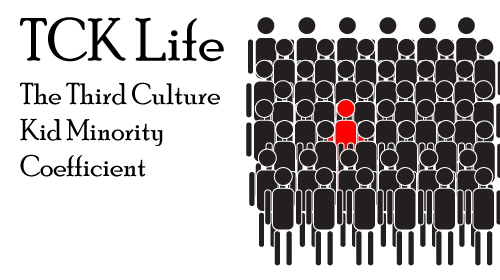
The Third Culture Kid Minority Coefficient

North Carolina recently positioned itself for a vote on Amendment One, a change to the State’s constitution that would essential change the civil union partnership for gay and straight couples alike. Essentially, the vote in question was whether a civil union was considered an appropriate form of union. Of course, counter-gay-rights activists decided to use this extremely broad amendment to block out every form of union of the same-sex-couple community. And they did such a good job about it that almost nobody noticed that the same sex union portion of the amendment was only the tip of the iceberg in terms of what was going to change for partnerships in the state of North Carolina.

Having only moved here five months ago, I hardly had time to get my paperwork in order and use my new-found American Citizenship to weigh in at the voting booth, so I simply got to sit back and watch as over three million dollars were spent in campaigning on both sides, then wait quietly for the results to arise.

As it turns out, North Carolina has decided that the “human” part in “human rights” is open to interpretation and not everyone was in fact born with equal rights. To me, that seems like an odd stance when it comes from a state that exists within a country that declared its independence with words that have come to be known across the entire world screaming for freedom and equality:

“We hold these truths to be self-evident, that all men are created equal, that they are endowed by their Creator with certain unalienable Rights, that among these are Life, Liberty, and the pursuit of Happiness.”

And with those words, a country took its first steps towards becoming the first true country of the people since the Roman democracy of centuries past. The people wrote a constitution, set the laws of the land, declared the place to be the home of everyone, welcoming all. And when the french gifted a statue of copper to be placed at the port of the land of the free, the inscription read “Give me your tired, your poor, your huddled masses yearning to breathe free.”

So what is it that this Third Culture Kid sees that so many First Culture Kids appear to be missing? Why is it that when I heard Amendment One had passed I was overcome with a chilling wave of icy disappointment in my fellow human beings?

I think it comes down to what I’m coining the Minority Coefficient. As a TCK, it doesn’t matter where we are in the world, what the people around us look like, what language they speak, what their beliefs are, or what cultures define them; we are always, always, a minority. The type of person we have become, the life we have led and the world we have created forces us into a realm of our own. We are understood only by other TCKs, but even the TCKs that know us don’t know the cultural hodgepodge that rages inside of us.

For this reason, even when we are in our passport country, surrounded by people that conform to our political viewpoints, sitting in the place of worship of our choice, speaking a language we understand with people who are all the same ethnicity and gender, we will always be the odd one out. But why?

TCKs have spent their youth moving from place to place. Many of them have experienced cultures that are so vastly different from their passport-countries, and in that experience they have learned through cross-cultural absorption that those stark differences from place to place are all elements of exactly the same human condition. With the power of technology, every FCK has seen hunger and famine. They have seen wars of god and government. They have seen oppression and succession. They have watched as people have been refused the freedom to say what they want, to confront their government, to vote, to make more money than their neighbor, to buy things they want and not just the things they need, to earn a wage that isn’t all taken by the government.

But we as TCKs did more than just see. We lived and breathed around those people. We learned so much from them, grew up around them, adopted parts of their lifestyles into our own culture. We, in a sense, partially became those people. And in becoming them our understanding of the sheer magnitude of global diversity achieved partial-realization. We began to see that no matter how much we adopted, no matter how many different cultures we found and made our own, we were hardly even scratching the surface of what’s really out there.

By becoming, even if just a little, these people that are now so far away, we developed a level of empathetic understanding. As a TCK, it becomes almost completely impossible to not feel the frustration or indecency done to fellow human beings. The level of intelligence and cultural understanding that runs through the TCK population is incredible. As a group, we are some of the most open-minded people in the world. So when we are confronted by a decision by the majority that suppresses the lives of others, we feel that pain even if we are not part of that group.

I believe that is why, when I read that Amendment One had passed with only 26% of the population voting against it, I was overcome with disgust and disappointment. While I am not gay, nor do I have any immediate desire to form a civil union with anyone, I am endlessly troubled by the idea that 74% of the voting population of the state I live in believes it’s okay to oppress the lives, liberties, and happiness of multiple groups of people that want nothing more than to just live their own lives without bothering anyone.

To me, it’s heartbreaking enough that this even came to a vote. The idea that oppression is allowed in the land of the free worries me, but what worries me more is that it’s not just voted on, it’s voted for. Because in the end, that’s all that happened this week. And sure, North Carolina isn’t the first state to vote on this issue. And sure, the state was expected to vote out this way months ago. But how does that make it better? How does knowing it would happen or that it has happened before make the lives that are damaged by this passing vote any less meaningful?

In the end, we are just perpetuating a belief that all men (and women) are not, in fact, born into equality. And to this particular Third Culture Kid who has spent his entire life as a minority, I worry that there will never come a day when people finally recognize that despite our differences, we are all seeds of the same soil, and we all need the same sunlight to grow.

_________
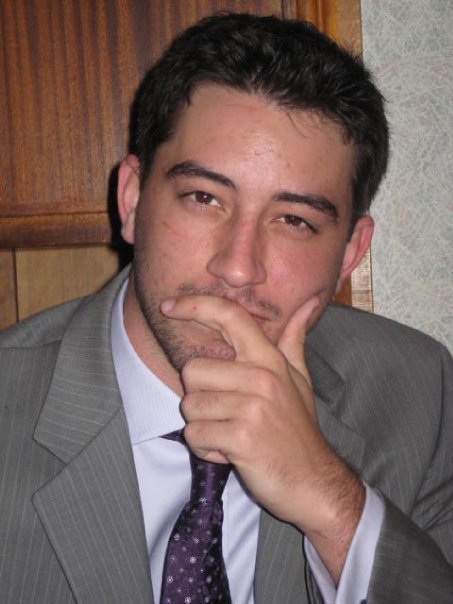
The Author

Author


Post by: James R. Mitchener

The TCK Barrier Between Parent and Child

For the most part, the Third Culture Kids produced in my generation were TCKs like myself. They were born to First Culture Kid parents, then yanked from that birth-culture and thrown into one or many different cultures throughout their development. At the time, if those TCKs-in-the-making were anything like me, they moaned and complained incessantly about always having to leave their friends. They cried and threw tantrums, made harsh exclamations of frustration, and spat empty threats at the prospect of leaving wherever they were to move somewhere different. But in the end, without fail, we always moved on, and our opinion of the matter meant little to nothing in the grand scheme of our parent’s expatriate lives.

Then one day, those TCKs grew up. We passed out of that bitter, hateful, aggressive teenage phase that everyone seems to pass through and became substantial members of society. We started being treated like adults, garnering respect for the things we said and the knowledge we had acquired throughout our lives; and that knowledge was impressive. Being natural cultural adapters, we had developed an eye that saw things that all but the most intuitive FCKs were blind to. And we did it naturally.

But there was something strange about it all, this internal belief that we were completely normal and yet, externally, we were regarded with incredible worldly knowledge and cultural intelligence, a feature of ourselves that we had always believed was a natural state of individual understanding. And when we realized in our early-maturity that what we had experienced wasn’t the natural state of affairs, we began searching for an answer as to why. In doing so, we were united with a world of TCKs that were scattered all over the planet who were so incredibly different to ourselves, who had experienced such vastly different things, but who truly understood exactly who we were and how we felt.

This, of course, is a highly condensed compilation of events, one that I will undoubtedly expand upon in greater detail in a later post, but it’s important to understand the development of our understanding before approaching the larger issue in our developmental realization; as we grew up, we realized that our parents who had spent all that time travelling the world with us didn’t understand a single thing about what we experienced.

My mother, who like all supportive parents is a regular reader of my works, called me from England where she’s been staying for almost a month now helping with post-funeral family situations to say that she had read my most recent post about being an expatriate everywhere. I thanked her, as usual, and asked how things were going back in the UK. Conversation continued along those lines before jumping back to the blog, where she said, with a hint of sadness in her voice, “Why don’t you write something happy about your experiences sometime?”

I paused for a minute, letting the words flow through me, and though I have always known it to be the case, and have in fact discussed it on multiple occasions in this blog and The Illusive Home, I realized just how disconnected from my experience she truly was.

Sure, we had traveled to all the same places, had seen all the same things, had gone on all the same tours and walked through the same foreign streets, but with every single trip we made, my perception of our travels was as different to hers as an apple is different to an elephant. She saw everything through the eyes of an FCK expatriate, a woman traveling the world with her family, always far away from home and the world she grew up in. She always had that stability, that memory of a lifetime of growth and development in a constant environment. She had memories of meeting her husband, my father, back in the UK, of getting married there with both sides of the family only an hour away from each other at most.  She remembers bringing two children into the world there, the first few years of our lives spent in that home that she had always known. And then she remembers leaving home, and always missing home, and always going back home to see the people she loved and grew up with.

And for me, the memories of my youth really began in Hong Kong. That home that she remembers so clearly was never a fundamental part of my life. I never had a stable set of friends that I grew up with. I never had grandparents that I spent years with and could escape to. I never had aunts and uncles and cousins that were right on my doorstep. I never had a place that felt like that word “home,” a word that means so little to a TCK. I never had the life she had.

Instead, I had a life of travel, of constant uprooting, of my formative and developmental years laced with culture after culture. I grew up transitioning from country to country that had starkly different political viewpoints, different caste systems, different streets, different smells, different laws, different educational systems, and different styles of general life. I had no stability, where she had an endless string of it.

So our unique perceptions of the world we experienced together were destined to be endlessly different, destined to be unrelated. And no matter what I said to her, she would never understand that what I write on these pages, when I say that I have no home and that I am endlessly tormented by the constant need to leave everything behind and travel, to give up the entire world I’ve created and move on to something new, that this isn’t in any way a sad thing in my eyes.

It is simply my life.

Sure, it’s a drastically different life compared to the incredible number of FCKs in the world. Sure, it’s completely odd to many and impossible to relate to for the rest. But in the end, it’s who I am, and who I am is a man of multiple cultures with the gift of a life that is full of understanding, respect, and appreciation for every corner of the planet.

So I responded with an explanation I knew she would never understand, one that would give her no happiness and would answer no questions. But it was one that I knew she would not be able to argue:

“It’s not sad, Mum. You just see it as sad because of something you know, something that I have never experienced. To me, it just is. And to the TCKs that read my words, they always see the pain, but in that pain they see the beauty. My need to move was grown from a seed you and Dad planted when I was very young, one that you watered with every single move. But that’s not the reason I travel today. It’s just the catalyst. The reason I do it now is because I need to continue to water that seed. I restart my life because of my unquenchable love for that next unknown culture. I travel because, while I simply cannot stop due to my conditioning, I can’t imagine a time that I would ever even want to stop. And sure, it causes me a great deal of pain and frustration, and sure, it causes me heartache and loneliness. But in the end, it gives me a life full of understanding, knowledge, and possibility. And why would I ever want to trade that for anything?”

_________

The Author

Author


Post by: James R. Mitchener

Expatriate Everywhere

As a child, I remember shop stalls on the sides of roads busied with red taxis, sellers yelling words I didn’t understand in the back of their stalls, chopping the heads off fish and cleaving open their bodies to expose beating hearts that show their freshness before chucking them on ice. I remember standing in a back-street watching a man with a bag of chickens take orders from passing people, cutting their heads off with scissors and yanking feathers from their bodies. I remember restaurants with rats on the floor picking up the scraps that fell from the table, completely ignored and respected by every patron as a sign that they were not in the food. I remember cockroaches the size of my fist scuttling across the kitchen, our domestic helper chasing them down with a shoe in her hand, slapping over and over at the ground. I remember cheap, neon lights flickering on as soon as the sun dipped below the horizon, bringing an ambiance and energy of glowing Cantonese characters to a city’s night life that never slept. I remember old men with long hairs growing out their moles spitting into the road, dodging buckets full of animal bits as you walked past closing stores, and people walking up to me holding toys telling me a price they had made up on the spot. I remember the smell of stained wood, the seemingly endless heights of buildings, and the rickety bus rides at breakneck speeds along poorly built roads too close to the cliff’s edge.

As that same child, I remember a suburban town in the proudest state of the land of the free. I remember going to school and being indoctrinated into a belief that this land, this state, was the greatest in the world. I remember looking for a place to call home, and wanting to believe them, and becoming part of the culture. But I remember God, and I remember I never agreed with the things I was told about him or the promises people made in his name. I remember wanting to be one of them, but knowing that I was as much one of them as I was the people of the other lands I had seen. I remember not having friends. I remember being scared and alone. I remember being afraid to meet people, afraid to attach. I remember leaving and feeling sad, but feeling happy at the same time.

I remember the cobblestone roads and pretty streets of a suburban neighborhood on the edge of the most notable french-speaking city on Earth. I remember walking up the path to buy bread from one shop, meat from another, and milk from yet another. I remember the glowing clover-like sign of a pharmacy on every single corner of every single street. I remember chickens slowly roasting on spits in every city, ready for picking for the meager price of the change floating in your pocket you would have not spent otherwise. I remember learning to speak the language, and being shunned for doing it wrong when I tried and being hated for not trying when I didn’t. I remember tight trousers on the native kids walking by, people rolling down the city streets on skateboards and roller skates, and beautiful women in clothing that cost more than most people make in a year. I remember planning my trips to the city around strikes, and driving through the tunnel to reveal a landscape of low built buildings that framed an enormous, steel tower.

I remember returning to the city of neon lights and busy streets. I remember how crowded it had become and how so much had changed without feeling any different at all. I remember walking through the streets and knowing that I was safe, of riding buses and taxi’s alone. I remember a school that treated me like an adult, even though I was not. I remember a man telling me I was a Third Culture Kid and not truly understanding what he meant. I remember making friends again, and I remember knowing for the first time in my life that one day I would say goodbye to them forever. I remember knowing that I would not stay here, that I would leave the city I loved and move to somewhere different.

I remember going back to the country of the proud. I remember university, and meeting a girl, and moving in with her, and having the first stable moment of my entire life. I remember how amazing it felt to be there, in one place, learning and being loved. But I remember talking about moving, about us having a family and taking them with us wherever we traveled. I remember her saying she would rather keep them at home, travel until we had kids, and then stay put. I remember not understanding what she meant by saying “stay home,” and I remember being scared. I remember the wedge that drove us apart, and the fear that I was committing to an eternity with someone else. I remember running away. I remember being free. I remember being inconsolably sad that I couldn’t have the life I had always wanted. I remember meeting the woman of my dreams, who lived so many miles away. I remember the long distance relationship feeling normal, only bothering me because it bothered her. I remember it pulling us apart. I remember loving her every day since then, feeling as though I lost something amazing for a reason I simply couldn’t understand. And I remember moving away, to another city, for another life, knowing from the second I left for this new land in a different state that I would use it as a stepping stone to the next. That I would never stay more than two or three years. And then I would be off again.

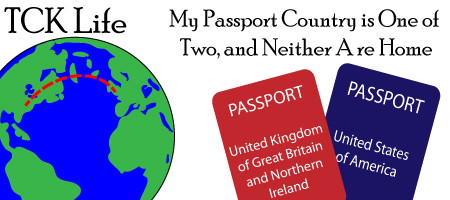
I am a Third Culture Kid, a TCK, and an Expatriate. My life is one built out of revolving doors and large metal planes. It’s a history of countless cities, of family always thousands of miles away, of girlfriends that have lived in different continents, of multiple cultures mashed into a single mind. I have two passports, officially a citizen of two different worlds. And yet, in both, I am an expat. I fit into neither, belong to none.

My home is airport terminals, new sites and city streets that I experience by never acting like a tourist but as a person that has lived there his entire life, even if I have never set foot there before. I capture culture and memories, never carrying a camera because I never have the desire to show people what I saw. Because what I see is not what others see. I see the people and their lives, the daily routines of everyone and everything. I taste the smells and remember the way the wind hit my face as I moved through the unknown.

I am not looking for the next great vacation when I travel. I am looking for life, for the living and breathing heart of a city that can only be found in the people that reside within it and the culture they have built through generations of development. I do not tell people stories of my travels, because there is no story they could ever understand.

Because where I remember a youth full of so many different worlds, everyone else remembers stability. They remember growing up around aunts and uncles and grandparents and cousins. They remember boyfriends and girlfriends that they didn’t have to say goodbye to because of distance, but left because they had run their course and met an end. They remember traveling as a gift, as a treat to see something different before returning to the same house in the same neighborhood with the same friends they have had since they were born.

But I remember none of that, because like many other TCKs in this world, I remember the world in pockets of time. I am an expatriate, through-and-through, without a home. And I live to see more.

_________
Post by: James R. Mitchener

My Passport Country is One of Two, and Neither Are Home

I landed back in the United Kingdom on Friday, April 6th. I had flown from Raleigh, North Carolina on a direct flight leaving the United States for the first time on my American passport, then arriving in England and passing through immigration on my UK passport. This is the first time I’ve done this since I naturalized and acquired my United States Citizenship. I was excited at first, feeling a bit like a spy or international man of mystery moving through the world with two forms of globally-recognized identification. It was going to be an auspicious event.

As it turns out, which is usually the case with me and the self-created expectations of my own emotional responses to new stimuli, I was wrong. It bugs me, sometimes, not having any control over what I think or how I feel about things. This was one of those times. As I passed through immigration and entered the country, I felt dirty, as though I were doing something I knew I shouldn’t. I felt as if I were betraying my heritage, having flown out on a US passport and then in on an English, something I am forced to keep secret so as not to annoy any governments to the point they revoke my nationality.

It didn’t take long, and I slipped back through into England with a quick glance at my passport and a “welcome home” from a man in a glass box. And that’s where it really stung. Usually I love hearing those words, walking into England and not saying a word so that my partial-american-accent isn’t noticed, and the first thing I am told standing on English soil is “welcome home.” Even though I know to my core this isn’t my home, that nowhere really is, it feels so nice to hear someone say it. Because the truth is, I really do love this country. I don’t have any desire to live her, mainly because I think it’s tinkering on the edge of total and complete catastrophic anarchy, but I really do love the country for all its natural beauty.

Last night, however, it hit me as to why this re-entry caused me so much grief. It’s not that I am sneaking around, it’s not that I’m violating some unwritten rule. Those things have never bothered me before, why would they now? It was something much more personal than that. Something deeper, more intricately woven into the substance of my existence. And I think it all starts with the simple fact that this Third Culture Kid happens to be at the point in his life where he’s realizing that the life he expected is not at all the life he is currently building.

It happens to all of us, TCKs or not, but I find it incredibly interesting now, with all that has happened since my arrival here, with my cousin’s death, with the distance between me and my family, and yes, the distance between me and the girl that I planned to start a family of my own with one day.

By getting my second passport, I finally solidified the fact that I have no physical home. And to take it one step further, I was reunited with the simple fact that as a TCK, my definition of home, in finding that one person that makes you want to be with them anywhere in the world, is an impossible lifestyle for many First Culture Kids. I have been seeing my ex a good deal, what with her relationship to my family and being closer to my cousins and aunt and uncle than my own relationship with them, and through this time we have spent together I truly understand the words I’ve been writing since the birth of The Illusive Home. A TCK is not designed, on a fundamental level, to co-exist eternally with a FCK. Unless one of the two are willing or able to change the root of their existence, the incompatibility is completely unavoidable. And no amount of love, attraction, or desire will change that.

So my shock and sadness wasn’t in just realizing I had abandoned any official tie to my passport country, but was in the knowledge that what I considered to be my home, being with the person I love more than anyone else, isn’t even remotely possible. Because in the end, I have no ability to understand her lack of ability to leave. To me, it seems like she simply doesn’t love me like I love her. While she says “I cannot leave my family,” I hear “I will not leave my family.” But the truth is, as a FCK, she simply can’t leave them. They are her life, and always have been. They have always been there, and that family extends to the friends she has grown up with, my cousins being prime examples. And to her, when I say “I might come back, but I will not stay, and one day we will have to leave,” I am saying to her that I do not love her enough to let her stay. But the truth is, I simply couldn’t come back to England and stay forever. I know, fundamentally, that I would never be physically capable of doing that.

Because when I gave up my single-passport life, I made the decision to say goodbye to the place I pretended was home. As I grow older, and the family that I have always visited here moves on with their lives, and grandparents and great-aunts come to the end of long and happy lives, the foundation upon which I built a connection to this country fades away. With every life that moves on, be it separating from the flock or passing into what theists would call the afterlife, I lose one more reason to ever come back.

And I think that’s what shook me to my core here. With the loss of my baby cousin who I hardly knew, I needed to come back home. But when I got here, I realized that in every single aspect of my life that I had been building towards, there is no home here for me anymore. The country never has been, and me pretending that it is via the lives of family members I am not that connected with is foolish. And with my ex, it only makes sense, for her sake, for me to give up and let go, because in the end one of us has to give up our home, and when it comes to people I love, I’d rather the one that gets hurt is always me. That’s just the high empathy-introvert side of me, I guess, combined with the knowledge that when it comes to letting go of things, I’m more practiced than most.

But hey, I have two passports now. I am not bound to a single state of existence. It’s just a shame that I don’t consider any possible existence within those passport-accessible countries to be anything more than a ticket to another place that just doesn’t quite make me happy.

_________
Post by: James R. Mitchener

Culture in Faith

Faith too often stands on its own in our current world. People are separated by it, define themselves by it, live their lives based on its principals. Yet, despite its completely interwoven nature with life, it is so infrequently discussed in the context of cultural development. The truth is, Faith is a fundamental part of all human existence, and how we approach it directly correlates to what our culture considers socially acceptable.

This entire process is visible in all corners of the planet. We will start with one end of the extreme, the cultural melting pots of the western world. Take, for example, the United States. Here you have a land full of different beliefs, a country founded on the principal belief of freedom. This freedom extends to all forms of life, from the right to speech to the right to practice, or not practice, the religion of your choosing. However, this once-radical structure of individual freedom was created due to radical believers being oppressed in a less radical society. So they left, traveled across the ocean, and created a colony of free beliefs where it didn’t matter how outside of the realm of normality you sat, you were welcome to be as radical or neutral as you saw fit.

This created a hodgepodge of faiths, faiths that all believed that they were right and the others were wrong, but faiths that existed in a world where all faiths were welcome. Here, society created two separate cultures, the Culture of Law and the Culture of Belief.

The Culture of Law stated that regardless of who you were, regardless of what you wanted to do, and regardless of your background, you were entitled to the same basic rights as everyone else who lived within the borders of this land.  You, like everyone else, are granted freedoms to do as you please with your faith, making that faith an individual decision that can be made by you and you alone. In exchange for that freedom, you are to accept that other faiths will be doing the same, and that they are granted the same rights and freedoms as yourself. This is a large part of being American, and it is an element of immense patriotic pride across the nation.

The Culture of Faith, however, subscribes to a different mentality. Many faiths, excluding a select few, believe that their faith is the only way to advance to a higher state of being. Your birth culture can throw you headfirst into your Culture of Faith, your parents raising you a Lutheran, taking you to a Lutheran church, spending time with Lutheran friends, teaching you Lutheran morals and religious laws. But your neighbor may be something completely different, a Buddhist or a Taoist, existing within the same parameters of their own unique Culture of Faith.

So where the Culture of Law grants freedom and rights, the Culture of Faith requires conflict. If your faith states that only your religion will grant you access to the life beyond, then you are constantly attempting to pull people into that faith to essentially “save” them. And the two cultures will conflict, the Culture of Law saying that you have the right to believe what you want, and the Culture of Faith saying you believe what we believe. And though these two bump together, you are trapped in a perpetual stalemate where each different faith is operating under exactly the same rules, separated only by a baseline religious structure of their particular cultural faith.

Of course, this is not the only extreme, nor is it the most extreme on this side of the spectrum. Take, for example, the Rwanda Genocide. Their Culture of Law and their Culture of Faith bumped heads until the tension became so strong that there was no room for the Culture of Law in the minds of the people. The Tutsi, the Culture of Law majority but the Culture of Faith minority, were systematically slaughtered by the Hutu, the Culture of Law minority but the Culture of Faith majority. In a single night, Hutu neighbors of Tutsi individuals walked next door to the homes of people they had lived beside for years, dragged them out of their houses, and murdered them, creating a total body count of an estimated 100,000 people in a single night. Then, with the Culture of Faith driven to exterminate the Culture of Law, the Hutu continued their slaughter bringing the total death tole to an estimated 800,000-1,000,000 people, or roughly 20% of the population of Rwanda.

Our cultures define us. For the people in Rwanda, just like the people in America, the lack of agreement between the Culture of Law and the Culture of Faith were simply strong enough to produce unspeakable horrors. In the United States, excluding a few radical groups, the Culture of Law and the Cultures of Faith allows for enough symbiosis to survive simultaneously. However, whenever a political leader takes the stage and claims himself to be one thing, claims the country to be a country of only one particular faith (Christian being the front-runner in the early days of the 21st century), that separation begins to grow. The Cultures that support the Culture of Law are slowly pushed away from it by their Culture of Faith.

Regardless of who you are, you are driven by many different cultures. These cultures help define you, to create the person you will become and the reasons you decide to do or not do certain things. The problem for many First Culture Kids is that they have existed within such a tight set of cultures that they fail to see the harmony and uniformity that exists between them all. To them, their culture is the single way of thought. They don’t easily understand that others may not think the way they do, or believe the things they believe. They fail to see the differences because they have been brought up confined to the parameters of their birth cultures, just like the people they cannot relate with were brought up confined to their particular culture as well.

For a Third Culture Kid, however, we have the gift and curse of seeing past those borders. We gave up a birth culture long ago, so where everyone else is confined, we are constantly adapting and absorbing. The TCK mentality of survival through adaptation forces us to see the lines that connect every single culture all across the world. We understand, completely on impulse, that the Taoist and the Muslim neighbors really aren’t that different at all. They developed into two separate cultures and two separate faiths for exactly the same reasons. The problem is, they are so blinded by that Culture of Faith that they can never see their similarity.

It’s a benefit to us, being TCKs. We are universal acceptors. We can relate and understand regardless of what you believe. But we do that because we lack the cultural exclusivity that a First Culture Kid possesses. Where we fall short is in understanding why you cannot see just how similar you are to the man you consider to be so fundamentally different. This could be the reason why the TCK community is, predominantly, an atheist one. It could also be why the faith-based TCKs I’ve met in my life are the most laid back and understanding members of the religious population I have had the pleasure of discussing God with. It could also be that, like everyone else, we are part of the same broken system. Our culture, be it a Third Culture, doesn’t allow us to understand what it means to be so strictly First Culture.

Whatever it may be, I am glad to know the truth; It doesn’t matter what your Culture of Faith may be, your atheist, Christian, Hindu, Buddhist, Taoist, etc. brothers and sisters are no different to you at all. You just need to look past your Culture of Faith to see it. And that alone, at least to me, makes it worth all the hassle of growing up a TCK.

_________
Post by: James R. Mitchener

The Question I Can’t Answer

I feel that today, of all days, I must address the single issue that has plagued me with complication my entire life. As a writer, a knowledge seeker, a sharer, and an educator, I have dedicated a large portion of my life to fully understanding what it means to be a Third Culture Kid. There are just so many of us out there, all scattered around the world with such a small idea of what the gifts our upbringing have handed us along the way, and so it only made sense for me to do everything I could to help spread that understanding to anyone who wanted to know about it. It has been a difficult journey, one that has forced me to confront countless aspects of my past, my present, my future, and my highly subdued consciousness in order to become the educated TCK that I am today. But it has been rewarding, too. Because of my willingness to stare that bitterness in the eyes, I have been fortunate enough to develop a strong and consistent fan base, give advice on a personal level, and even have been asked to be the featured writer for the ThirdCultured website, creating all the ThirdCultured Blog copy targeted towards the importance of growing up a TCK.

Regardless of how much I try, though, how much I learn and understand, there is always this one tiny place in the recess of my mind that is just untouchable to my logic. It has hidden away so quietly, protected itself so well that no matter how much I try to use common sense or logic to break it down and explain its importance to the world, I find myself struggling to describe the impact it has on me as a TCK. I fit it in to these posts as often as I can, a word here or a sentence there, but the explanation never follows, and it only works to support an argument that already has enough backing to stand alone, without this tiny fragmented addition. The thing that gets me, that I hope confuses other TCKs as much as myself, is love.

I will try now, because I believe given the fact that this blog is about TCKs, but also about me as a TCK, to use my experience yesterday to explain why the topic of love confuses me to no end. I know that it plays a crucial role in the life of an Adult Third Culture Kid, that it plays a crucial role in the life of anyone, but even though I cannot explain why, I just know to my core that the way it effects a TCK is unlike the way it effects anyone else on this planet. It’s more than just love to us. It’s a gateway to something terrifying, because the entire principal of it all requires so much access to things we as TCKs have given up to be who we are.

Statistically, TCKs are the group with the oldest first-marriage rate. We don’t do it young, and we generally wait until we are in our early 30’s before jumping into the marriage game for the first time in our lives. Likewise, we are also one of the most stable marriage groups on Earth. We generally don’t get divorced, and we generally don’t want to. So far, I can explain why to all of these things. The problem comes here: If all these things are true, then what is it about us, or perhaps just me, that makes love so terrifying?

It’s time to give you the background, I suppose. It has been scattered in fragments throughout this blog, and detailed a little closer in The Illusive Home, but it’s time to put it all out on the table so that the potential for understanding is right before your eyes. I fell in love with a girl, we will call her Lara for the sake of not putting her name out into the world, the very first time I laid eyes on her. That’s not a joke, and is important to understand because like many TCKs, I’ve always been the guy that falls for people very quickly, but falls in love slowly. That tactic gives me the ability to open up enough to see their value, but close the door too if I don’t find what I’m looking for without pain or frustration. So when I first saw Lara (and this is difficult because I’ve actually known her her entire life, but went many years without seeing her until she came to visit America with my cousins well over a year ago), I had no idea what was happening. Love at first sight is such a stupid concept, a foolish one that leaves you open to so much hurt, but there it was, unavoidable and uncontrollable.

Lara felt the same. We said “I love you” after 15 days, of which we had seen each other for no more than six of those days. She left America, then came back three weeks later. We had a long distance relationship, and it really didn’t bother me except for not getting to lie down beside her at night and kiss her when I woke up in the morning. We did well, and violated every standard relationship protocol and wall that TCKs are so fantastic at creating. Then we broke up. Neither of us wanted to, but it happened. It’s complicated, and I still don’t fully understand what happened.

I spent six months and sixteen days working to get over it. I’m usually pretty good at that. A couple weeks, maybe a month of heavy drinking and spending far too much money followed by a whole lot of writing and severe depression, and then one day I wake up, anything from 3 weeks to several months later, and I feel fine. It’s just… gone, plain and simple. I still love the person, but the TCK side of me has conquered it all and cut the emotions and ties out of my life. A remarkable skill, one that I love so very dearly in times like that.

With Lara, that didn’t work.

I arrived back in England on Thursday, and we met up yesterday. My TCK side did what it always does, it put up walls and protected me. And like always, my level of perception or situational awareness or whatever you wish to call it had already mapped out exactly what would happen. We would meet, we would talk, and all those days in the recent past as my return to England grew closer and her saying she missed me and loved me got stronger would fade away, because like me, she would have protected herself. And like usual, I was right. Down to almost every minute detail, I was right.

So here’s where it all comes together. here’s where curiosity and developing a TCK understanding hits its wall. I understand how we behave, why we behave the way we do, and why we are so good at letting people go that have meant so much to us. So why, then, is it impossible for me to do so here? Why, when love comes into the equation, does it become so nearly impossible to do what we do every single day of our lives without any issue or frustration at all. I ask only because the collective minds of TCKs are just such powerful tools. I mean, I understand that to me, she was always the closest thing to home I could ever ask for. But why should that matter? I’ve never wanted a home before, and I don’t want one now. So the real question, the one I want to leave everyone with to ponder or respond to or mock me with, is this: Why when you love someone more than you ever thought possible do all the skills of cutting loose and letting go you developed in your life fail to work? What about that situation makes our unbreakable castle feel as though it was built out of Lego bricks?

_________
Post by: James R. Mitchener

The Passport

Thanks to a life of international travel, cultural immersion, and constantly changing lifestyles, I’ve reached a point where there really is very little in this world that can actually shock me. I mean this in regards to comments made in passing, things I see on the news, or the state of the global economy and how it ruins the lives of the people that build it when things go wrong. I certainly don’t mean that I can’t be shocked if someone were to walk up behind me very quietly, then scream loudly in my ear while grabbing by shoulders and shaking my body viciously. That would shock me. A lot. So please don’t do it. But the aspects of our constantly changing world, the things that make people say “I can’t believe those people!” or “How could anyone ever do that?” have almost no effect on me at all. I’ve come to realize that human beings are capable of anything. Some of it is spectacular, and some of it is atrocious, but as far as the limits of humanity take us, we are almost unstoppable regardless of which way we lean.

That being said, there are exceptions that prove every rule. I may not often be surprised, but there are some things that still leave me stunned and speechless no matter how often I hear them. The second-greatest of all of these surprises, and I start with this one because the greatest often follows it, is the infamous statement of “I don’t have a passport.” No matter where I am, no matter who I’m with, when I hear these words from people I’m currently conversing with or from across the room, I shudder. The Third Culture Kid side of me comes crashing forward, rocketing into the conversation like a drunk man driving a sports car, then it slams at full speed into an immovable object, leaving me dazed and confused and uncertain of where I even am. Why? Because to me, my passport is the single most important thing in my life. It’s not just an ID, it’s a keycard to the entire planet. Without it, I’m literally stuck wherever I am, a prisoner waiting to be released from a jail that is so huge and unescapable that it fills me with anxiety just imagining it. With my passport in my hand, I can go anywhere I want (within political reason) just by showing a man in an airport a tiny book with my picture in it. It’s the pass-card to my entire cultural heritage.

To emphasize how embedded this belief has been, when I was in my final year of high school, I was part of a programme called PALs, short for Peer Assisted Leadership. For the first six weeks, the PALs all did bonding exercises together, having discussions and opening up and building a community that’s strong and collected. It never worked with me, but then those bonding exercises never do. I recognize the point, but those people with which I’m supposed to be so similar will never understand me, and so I would simply listen and learn what made them who they are, then use comedy to make them believe they knew who I was. But the truth is, the bonding game just feels like a foreign enemy laying siege to my castle. I sit behind my walls of brick and mortar, waiting for someone to starve me out or get me sick or weak, and then I wait for them to pounce. What no one ever understands, however, is that the walls of a TCK are not here to protect us from you, but are here to protect you from us. Because if we were to open up and share our views, our opinions, and our history with everyone we met, we’d be the greatest outliers in history. We are adaptors, individuals with the ability to use what we’ve learned to fit into any situation, but that skill comes with limitations and control. No one ever sees or hears the all-encompassing us.

The exercise in question, however, was one in which we all sat in a circle and went around the room answering one simple question. The question was seemingly inconsequential, but it was one that planted an idea, letting each of our peers catch a glimpse of what we held to be valuable in our lives. It was a question of importance, put simply but detailing so much more, the question of “If your house was burning to the ground and you had the time to grab just one inanimate object, what would you grab?”

Me peers, being who they were, creatures of the first culture and conditioned to say the things they said, discussed taking things like photographs of family, gifts from grandparents, items that have been passed down for generation after generation. I was the last person to speak, and when it came my turn, I looked at a classroom full of strangers and stated “what’s wrong with you people, I’d take my passport any day.” There was an awkward silence, then an outbreak of laughter, followed by people shaking their heads in both acknowledgement and disagreement.

Then came the statement that shocks me more than ever, the one that knocks me so far back from reality that I really have no idea how to argue with it. A girl across the room said: “I don’t even have a passport. Why would I need one, I’m never going to leave Houston!”

And then it was my turn to just sit in silence and shake my head.

I have said it on multiple occasions before, but I think it’s time to say it one more time, just to look at the opposite side of the equation for a change. TCKs are impossible to understand unless you, too, are a TCK. But it’s so much more than that. We aren’t alone in being impossible to understand. Thanks to an idea that has so many names, the one of which I often use is Equivalent Exchange, but to Taoists would be called Yin and Yang, or the Buddhist philosophy of Dualism, there has to be a counterbalance to each of us. And so when I hear people say they have no desire to even leave their state, but then take it one step farther and state they would never even their hometown, it makes sense that those people would exist, regardless of my inability to understand them. They exist because like us, the TCKs who will never want to let go of that little piece of paper and card-stock called a passport, there must be someone who would never even want to see that tiny global identification booklet? To us, it represents the world, the key to everywhere we will ever go and everything we will ever learn. But to them, it represents saying goodbye to the only thing in life that matters.

It’s true, I don’t understand it. I never will. But that’s because their lives, like ours, are built out of the experiences that we’ve had as we have developed and grown. The only major difference I see in it all is that as TCKs, we weren’t ever given a choice in the matter.

_________
Post by: James R. Mitchener

The Hidden Value

Three days ago, I got a taste of something I haven’t ever had before in my life. I got a taste of what it’s like to fear for the life of someone you care about. I’ve lost people before, people in school, my grandmother, extended family, pets, but like all things in this world, they each hold a different weight on your mind. As a Third Culture Kid, loss is just part of life. You just sort of get used to it, and you get used to it at a very young age. If you don’t, it consumes you, because the life of a TCK is built upon the foundation of loss. Without it, we would never know how to let go, how to cease the moment of a new community, of a new culture, of a new group of strangers that are all waiting to call themselves friends. We would cling to the past, and miss the present, all because we had never bothered to find the key that opened the door to change.

I’ve found in my life that the abilities I gained in coping with loss as I grew up came hand-in-hand with knowing how to cope with death. Sometimes, people are there, and then one day, they aren’t. It doesn’t always work with losing people that are alive, and it doesn’t always work with losing people in death, either. But for the most part, the system doesn’t fail. You let go, not because you want to forget, but because you know that in holding onto something that is no longer there makes you miss living in the moment. The memories remain, the influence that person had on your life still making you who you are, but you acknowledge that there will be no more chapters in that specific book. Instead, you close it up, and start writing another.

By now, you have an understanding of my family dynamic. They are important because they are family, I was taught that by my First Culture Kid parents and extended family. Family is important. I don’t fully understand the reasoning, and I probably never will, but I know that in order to make my family happy, I must pretend to see that value and connection. And if it makes them happy, then to me it’s worth it, because though I sometimes do things that are spiteful or cruel, I am truly a good hearted person who doesn’t ever want to hurt anyone, unless they cause pain to the people I love. We all have our weaknesses, and attacking those that I love is simply one of mine. Beyond that, I generally don’t care to cause people harm.

Regarding family, though, my parents are by far the most interesting. They shaped me the most of all my other family members, I suppose. I mean, they did raise me after all, or at least raised me when I was at home. They taught me life lessons as best they could, and I learned the rest from the people I met around the world. But for the most part, my parents did a good job with me. They are good people, or try to be, but like me they have their flaws. My father was usually grumpy as we grew up, and we were never really that close. My mother was always there, but as I’ve grown and evolved and sunk deeper into my TCK upbringing, I have started to notice that there are many things about this world and the cultures within it she simply doesn’t understand. Her view of the big picture only extends as far as most FCKs views extend. It’s not her fault, and it’s nothing to be ashamed of by any means, it’s just a difference in our lives that makes it very hard for me to relate to her these days. We fight more than we should, but that’s because deep down, we are both fundamentally different thinkers. I believe that’s a good thing, though. We learn the most from those that are different to us. Mostly, we learn why we don’t believe what they believe, and why those beliefs are important to us. Without her knowing it, my mother’s drastically different views on the world have done nothing but strengthen mine by showing me more and more why I don’t believe what she believes.

I digress, however, because the point in today’s post is this: Though my parents have never been what I would call the closest people in my life, they certainly hold a lot more value in my heart than I ever knew. My dad, who I’ve always told people I love and respect, just don’t really know, is shockingly closer to my heart that I ever realized. I know this because three days ago, he came down with a sore throat. That sore throat turned into an infection, a bad one, in a matter of hours. He was feeling bad by 08:00, and by 13:00, his vocal chords had swollen to a point he couldn’t swallow, couldn’t take, and could hardly breathe.

My mother was out of town with my grandfather who is visiting from England, both of them in Lubbock visiting my younger brother, so I took my dad to the doctor, who told me to take him to the Emergency Room at the hospital. As soon as we walked in, he was admitted, plugged into an IV, fed fluids, put on a monitor, given steroids, antibiotics, and oxygen. They kept telling us it would be okay, but that ability to read people better than they know that most TCKs have kept tingling in the back of my mind. Something in their voices, their expressions, it just didn’t feel right.

At 21:00, Dad was still in the ER. I stepped out of his room and hovered nearby, listening to the nurses at the nursing station. I heard them saying that everyone was fine on the floor, except for the patient in room 22 who’s blood pressure and heart rate were high enough that he was risking cardiac arrest. They said he needed to remain calm under all circumstances or he could suffocate, or worse, slip into cardiac arrest. My father was the patient in room 22.

For the first time, I had to make a decision based on what I’d learned that could greatly shape the lives of many different people. I could call my mother and tell her it was much more serious than they thought, and she could be on the first flight back to Houston the next day, or I could bite my tongue and ride it out. I realized that these events would take place within the next 12-18 hours, so even if my mother knew, she would not return in time. Telling her would only panic her, and possibly cause her to speak to Dad and panic him too, which was the one thing the nurses said couldn’t happen. His heart rate couldn’t go up.

So I chose to say nothing.

My dad was moved to the Intensive Care Unit for two days. For the entire first night, he was high risk. His heart rate began to drop when they put some more medicine into his IV, but they were still worried his throat might close. I stayed with him a long time that night, and we didn’t talk, because he couldn’t. I simply handed him a bucket he was spitting into between reading my book while he slipped in and out of delirious consciousness. But in that silence, I got to understand his importance. Sometimes, it doesn’t matter if people annoy you, or if you don’t understand the importance of family. Sometimes, there are just some people in this world that the tricks a TCK has learned in accepting loss just don’t work on.

My dad is one of those people, and now that he’s stable and grumpy again, I’m hoping I can go to sleep for the first time in over 48 hours.

_________
Post by: James R. Mitchener